
To write song lyrics, start with one idea you can say in a single sentence, write the chorus first so the song has a center, then build the verses from concrete details that lead back to that chorus. Keep every line singable: short, rhythmic, and easy to say out loud. Finish by reading or singing each line over a steady beat and rewriting anything that trips your tongue or repeats what another line already said.
That is the short answer. The rest of this guide breaks it into steps, gives a dedicated method for writing a chorus, shows how verses, pre-choruses, and bridges divide the work, and includes original example lines you can study and adapt. Every lyric example on this page was written for this guide; none of it quotes an existing song.
You do not need music theory to write good lyrics. You need a clear idea, specific images, and the patience to revise. If you want to hear a draft as a finished song, you can paste your lyrics into GoAISong Text to Song, or start from an idea in the AI Lyrics Generator and rewrite the draft in your own voice.
How do you write song lyrics step by step?
Most finished lyrics come from the same eight moves, even when the writer does them in a different order. The order below works well for beginners because it locks the most important line before you spend energy on verses that might not fit.
Treat each step as a short pass rather than a perfect draft. A rough chorus that clearly states the idea is more useful than a polished verse about nothing in particular.
| Step | What to do | Quick example |
|---|---|---|
| 1. Pick one idea | Write the song in one sentence before writing any lyrics | Moving out of the apartment where we grew up together |
| 2. Choose the point of view | Decide who is singing and who they are singing to | First person, singing to an old roommate |
| 3. Find the title line | Look for a short, repeatable phrase that holds the idea | Second coat of paint |
| 4. Write the chorus | State the main feeling in four to eight short lines around the title | See the chorus method below |
| 5. Write verse one | Set the scene with objects, places, and actions | Boxes by the door, keys on the counter |
| 6. Write verse two | Move time forward or raise the stakes; do not repeat verse one | The new tenant asks what the pencil marks mean |
| 7. Add a bridge if needed | Change the angle once before the final chorus | Admit what the paint cannot cover |
| 8. Read it out loud and revise | Fix lines that are hard to sing, vague, or repeated | Swap abstract words for things you can see |
How do you find a song idea worth writing about?
A strong song idea is small and specific. "Love" or "growing up" is a theme, not an idea. "The night you taught me to drive in an empty parking lot" is an idea, because it has a place, a moment, and a relationship the listener can picture.
Good ideas usually contain tension: something changed, something is about to change, or someone wants something they do not have yet. That tension gives the chorus something to say and gives the verses something to show.
- Mine your notes app, voice memos, and saved messages for lines that already sound like you.
- Start from an object with a story behind it: a jacket, a key, a mug, a ticket stub.
- Write down a sentence someone actually said to you and ask what it meant.
- Pick a moment of change: a move, a goodbye, a first day, a decision you made late at night.
- Write for one listener, even if the song is meant for everyone.
| Theme (too broad) | Idea (song-ready) | Why it works |
|---|---|---|
| Missing home | Calling your mom just to hear the kitchen radio in the background | One sound carries the whole feeling |
| Friendship | The friend who still saves you the passenger seat after ten years | A habit shows loyalty without saying the word |
| Starting over | Painting the walls of a new room you are not sure you will stay in | Action plus doubt gives the chorus tension |
| Heartbreak | Deleting a shared playlist one song at a time | A concrete ritual instead of a generic sad line |
How do you write a chorus?
To write a chorus, put the main idea of the song into one short title line, place that line at the start or end of the chorus, and surround it with three to seven simple lines that say how the singer feels about it. The chorus should be the easiest part of the song to remember and the part that changes least each time it returns.
The chorus is where the listener learns what the song is about, so it can be more direct than the verses. Verses show the scene; the chorus names the feeling. Use plain words, open vowel sounds that are easy to hold on a long note, and a rhythm that is a little simpler or punchier than the verse around it.
Here is an original example chorus built around the title line "second coat of paint":
"We put on a second coat of paint / On walls that heard us when we couldn't stay / It doesn't hide the cracks, it lets them breathe / A second coat of paint for you and me."
The title opens and closes the chorus, the middle lines add one new thought each, and the final line turns the image into a statement about the relationship. That frame of title, development, and return works for almost any genre.
- Step 1: Write the song idea as one sentence, then cut it down to a two-to-six word title phrase.
- Step 2: Put the title in the first line, the last line, or both.
- Step 3: Keep the chorus to roughly four to eight short lines so it can repeat without dragging.
- Step 4: Use simpler, more open words than the verses; save the dense detail for the verses.
- Step 5: Repeat a word, phrase, or rhythm inside the chorus so it is easy to sing back.
- Step 6: Lift the energy with shorter phrases, a higher melodic idea, or a stronger rhythmic hit.
- Step 7: Test it by singing it once, waiting, and checking whether you can still recall the title line.
| Chorus problem | Weak version | Stronger version |
|---|---|---|
| No title line | I feel so lost without you here tonight | Leave the window open, I can find my way back |
| Too much detail | The blue car, the bridge, the bakery on Fifth, the rain at six | Every road still turns into your street |
| Abstract feeling only | My heart is full of love and pain | I still set two plates out of habit |
| Hard to sing | Particularly unpredictable circumstances | Nothing goes the way we planned |
How do you write verses that lead to the chorus?
Verses show; the chorus tells. Each verse should give the listener specific images that make the chorus feel earned when it arrives. Instead of explaining that you are sad, put the listener in a room where the sadness is visible.
Verse one usually sets the scene: where we are, who is there, and what just happened. Verse two should move the story forward in time, change the location, or reveal something new, so the second chorus means more than the first. Repeating the same information in verse two is the most common reason songs feel long.
An original example of a scene-setting verse: "Your jacket's still on the hook by the door / Two mugs in the sink like the morning before / I hum with the radio, skip every song / That sounds like the summer we both got it wrong."
| Telling (weak) | Showing (stronger) | What changed |
|---|---|---|
| I miss you every day | Your toothbrush still leans in the cup by the sink | An object stands in for the feeling |
| We had so much fun | We split one umbrella and still got soaked to the knees | A moment the listener can picture |
| I am nervous about the future | I have rehearsed the speech in the car three times | An action reveals the emotion |
| Life is hard right now | Rent is due on Friday and the car will not start | Concrete stakes instead of a summary |
What song structure should you use for your lyrics?
Structure decides when the listener hears each part of your story. The verse–chorus form is the most widely used in pop, rock, country, R&B, and hip-hop because it alternates new information with a familiar return.
Choose the structure before you write too many lines, then check that each section has a clear job. If two sections have the same job, cut one of them.
| Structure | Best for | Section jobs |
|---|---|---|
| Verse / Chorus / Verse / Chorus / Bridge / Chorus | Most pop, rock, country, and R&B songs | Verses tell the story, chorus repeats the point, bridge shifts the angle |
| Verse / Pre-chorus / Chorus (repeated) | Songs that need a build into a big chorus | Pre-chorus raises tension so the chorus lands harder |
| Verse / Verse / Bridge / Verse (AABA) | Ballads, folk, and storytelling songs | The title line repeats at the end of each verse instead of a chorus |
| Hook / Verse / Hook (short form) | Short clips, gift songs, intros, and social videos | The hook comes first so the main line is heard early |
What goes in a pre-chorus and a bridge?
A pre-chorus is a short section, often two to four lines, that sits between the verse and chorus. Its job is to build anticipation: the lines usually get shorter, the rhythm tightens, and the words lean toward the chorus idea without stating it yet.
A bridge appears once, usually after the second chorus. It offers a new angle on the song idea: a confession, a turn in time, a question, or the other person's point of view. A good bridge makes the final chorus feel different even when the words are the same.
- Pre-chorus: tighten the rhythm and point toward the title without saying it.
- Bridge: change one thing, such as time, perspective, or the honesty of the singer.
- Bridge: keep it short; four to six lines is usually enough.
- Skip the bridge if the song already feels complete after two verses and choruses.
How do you make lyrics rhyme and flow?
Rhyme helps the listener predict and remember lines, but forced rhyme is worse than no rhyme. If a line only exists because it rhymes, rewrite it. Modern lyrics use a mix of perfect rhymes and near rhymes so the meaning comes first.
Flow comes from stress, not syllable count alone. Say the line out loud and notice which syllables naturally get emphasis. Those stressed syllables should land on the strong beats of the music. If you have to bend a word's natural stress to fit the rhythm, change the word.
| Rhyme type | Example pair | When to use it |
|---|---|---|
| Perfect rhyme | door / before | Choruses and lines that need a strong landing |
| Near (slant) rhyme | paint / stay | Verses where natural phrasing matters more than a perfect match |
| Internal rhyme | late night, streetlight | Adding momentum inside a line without waiting for the end |
| Multi-syllable rhyme | open road / broken code | Hooks and rap-leaning verses that need extra punch |
How do you edit lyrics so they sound finished?
Editing is where most lyrics improve. Read the whole lyric out loud from top to bottom without stopping, then mark every line where you stumbled, lost interest, or heard a phrase that could appear in any song.
Revise in passes: one pass for clarity, one for imagery, one for singability. Changing everything at once makes it hard to tell what actually improved.
- Replace abstract words such as love, pain, and forever with something the listener can see or hear.
- Cut filler words that only fill the rhythm, such as "just", "really", and "so".
- Check that each verse adds new information instead of repeating the chorus idea.
- Make sure the title appears where the listener expects it, usually in the chorus.
- Remove any line borrowed from an existing song; write your own version of the idea instead.
- Sing or speak the lyric over a simple beat and fix lines with too many syllables.
Can AI help you write song lyrics?
Yes, as a drafting partner. AI is useful for getting past a blank page, trying structure options, or hearing how a lyric sounds sung over a melody. It works best when you bring the idea and the specific details, then edit the draft until it sounds like you.
On GoAISong, the AI Lyrics Generator turns a short song idea, genre, mood, and structure choice into lyric drafts you can copy and edit. When your lyrics are finished, Text to Song turns them into a full song with melody and vocals so you can hear whether the chorus actually lands. Generate two versions, compare them, and adjust one thing at a time.
Free generations are for listening, audio download, and personal evaluation. If the song will be released, monetized, or used in client work, Creator and Studio subscriptions include a commercial-use license under GoAISong terms for covered output; check the commercial-use scope before publishing.
| Goal | GoAISong path | What you add |
|---|---|---|
| Get unstuck on a blank page | AI Lyrics Generator | A one-sentence idea, a mood, and one concrete detail |
| Hear your own finished lyrics sung | Text to Song | Your lyrics, a genre, and a vocal direction |
| Test whether the chorus works | Generate two versions and compare | Notes on which chorus line you remember afterward |
| Write a better generation brief | How to write AI song prompts guide | Use case, genre, mood, vocals, and ending |
What does a clear chorus sound like in a finished song?
These two previews were generated on GoAISong from the prompts shown. Listen for how quickly each one reaches its main line, and how the verse detail sets up the hook.

Indie pop / 0:42
Indie Pop Launch Hook
A compact structure with one memorable chorus: notice how early the hook arrives and how little the chorus changes.
Create a 35 to 45 second original indie pop song preview with female vocals for a creator launch video. Use bright guitars, light drums, a warm melodic hook, and lyrics about starting a new project with confidence. Keep the structure compact with a quick intro, one memorable chorus, and a clean ending. Do not reference or imitate any real artist.
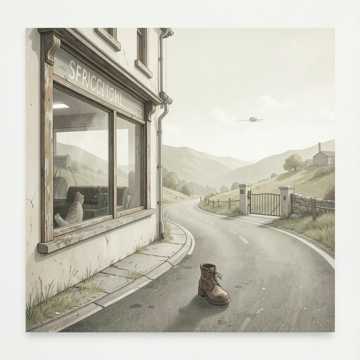
Folk acoustic / 0:45
Folk Acoustic Story Cue
A storytelling verse built on one image, looking back on a long road, with a simple melody that leaves room for the words.
Create a 35 to 50 second original folk acoustic song preview with male vocals for a storytelling video. Use fingerpicked guitar, soft percussion, and intimate lyrics about looking back on a long road and choosing the next step. Keep the melody simple, leave room for spoken edits, and end cleanly. Do not reference or imitate any real artist.
FAQ
How do I start writing song lyrics if I have no idea?
Start with one specific moment, object, or sentence someone said to you. Write it as a single sentence, find a short phrase inside it that could be a title, and build the chorus around that phrase before writing verses.
Should I write the chorus or the verses first?
Writing the chorus first is usually easier, because it fixes the main idea and the title line. Once the chorus is clear, each verse can be written to lead toward it instead of wandering.
How long should a chorus be?
Most choruses are short enough to repeat comfortably, often around four to eight lines. The key is that the title line is easy to find and remember after one listen.
Do song lyrics have to rhyme?
No. Rhyme helps memory and flow, but meaning comes first. Many lyrics mix perfect rhymes with near rhymes, and some lines do not rhyme at all. Rewrite any line that only exists to force a rhyme.
How many lines should a verse have?
There is no fixed rule. Many songs use verses of roughly four to eight lines, but the right length is whatever it takes to show one scene or move the story forward once.
Can I use lyrics written with AI in a song I release?
You can edit and use AI-assisted lyrics in your own songs. For GoAISong-generated songs that will be released, monetized, or used in client work, an active Creator or Studio subscription includes a commercial-use license under GoAISong terms; platform rules and any third-party material you add remain your responsibility.
Hear your lyrics as a finished song
Paste finished lyrics into Text to Song to hear them with melody and vocals, or start from an idea in the AI Lyrics Generator and rewrite the draft in your own words.
Commercial-use disclosure
The GoAISong Commercial License grants the right to use the GoAISong-generated output in specified commercial contexts under GoAISong terms. This license does not cover: (1) third-party inputs you upload (audio, lyrics, names, likenesses); (2) third-party platform policies (Spotify, Apple Music, TikTok, YouTube Content ID, etc.); (3) unauthorized real-artist voice or impersonation; (4) lyrics, melody, trademark, or rights-of-publicity violations in your input. Users remain responsible for confirming downstream platform and rights-holder requirements.